
Relevant Overviews
- Bluesky and the ATmosphere
- Content Strategy
- Fediverse
- Online Strategy
- Online Community Management
- Social Media Strategy
- Content Creation & Marketing
- Digital Transformation
- Thinking tools
- Zettelkasten
- Blockchain, Crypto, NFTs etc
- Personal Productivity
- Innovation Strategy
- Surveillance Capitalism, Social media and Polarisation (Overview)
- Psychology
- Social Web
- Media
- Politics
- Communications Strategy
- Science&Technology
- Business
www.techpolicy.press

Alexandra Geese on the EC's "first-ever non-compliance decision under the Digital Services Act against X ... a necessary first step in enforcing European digital regulation... [but] not sufficient to address the systemic risks posed by X... systematic amplification of certain political content and the systematic suppression of others" as part of "…
www.project-syndicate.org

"Europe’s systemic dependency on Big Tech’s social-media platforms threatens the continent’s digital sovereignty" - perhaps nothing new, but well argued nevertheless:"Just as the European Union seeks to reduce its reliance on external providers for semiconductors... it must do the same for social media. dominant platforms extract value from Europe…
medium.com

From 2018, a good history, but no solutions: "Facebook didn’t invent the feature, but they definitely broke it. How can we better regulate future disruptive ideas?".Brief historyPart of the A Brief History of Attention series, starts with some brief history, culminating with Zuckerberg combining "three core concepts — the social graph, the news fe…
www.nytimes.com
According to Mark Zuckerberg, "Consumers no longer control their social-media feeds. Meta’s algorithm... is showing users “a lot of stuff” not posted by people they had connected with... future feeds [will] show you “content that’s generated by an A.I. system.”" Fortunately, "Our legal system is starting to recognize this shift and hold tech giant…
publicinfrastructure.org

The Initiative for Digital Public Infrastructure's manifesto sets out the three legs upon which an open public sphere must rest.
Like
algorithm,
social media,
regulation,
community,
privacy,
publicsphere,
moderation,
fediverse,
adversarial interoperability,
cozyweb,
pluriverse,
vsop,
pubhub,
robert putnam,
idpi,
ai4communities
doctorow.medium.com
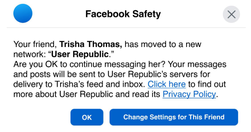
Those who've read Doctorow's books and blogs on the collective action problem stopping people leave the established social media walled gardens may not find anything new, except for the quite brilliant link he makes with "the 1971 film adaptation of Fiddler on the Roof ... the Anatevkans can’t just pack up and leave: they are being held hostage…by…
Like
social media,
regulation,
facebook,
eu,
twitter,
surveillance,
interoperability,
fediverse,
cory doctorow
www.vox.com

I do like a challenge."We live in the most distracted time in human history. Can we reclaim our attention spans?... A new book by the British journalist Johann Hari, called Stolen Focus, takes a close look at what’s happening — and what’s happened — to our collective attention... we’re all becoming lost in our own lives, which feel more and more …
www.economist.com
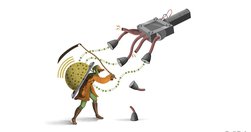
Overview of efforts to put data back into the hands of people. "platforms’ business models depend on network effects and scale to keep users engaged and to sell more advertising... a culture of virality that... poisons public discourse." Moreover, their data dominance is stifling competition & innovation. " So trustbusters are on the warpath... An…
medium.com
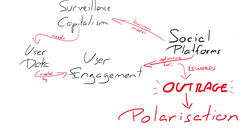
For the 6th episode of his Futurized podcast, Trond Undheim asked me why surveillance capitalism inevitably leads to polarised, undemocratic and dysfunctional societies, and what we must do about it...If we don’t change course, in the future we will be less will informed, more polarised, massively manipulated, living in more corrupt and less democ…
Think
social media,
regulation,
media,
identity,
tribe,
engagement,
polarization,
future,
surveillance,
myhub,
zettelkasten
niemanreports.org

we needed to take investigative journalism and combine it with technology to build communities of action... I went from managing 1,000 journalists to 12 people...Our information ecosystem has already been destroyed. We’ve been poisoned... We were the third [news outlet] attacked... we stood up because we have no other business interests...In the o…
Like
social media,
regulation,
media,
journalism,
ethics,
authoritarianism,
disinformation,
data portability,
philippines
onezero.medium.com

proposal ... for a U.S. government agency to regulate online speech... on all social media.... fails to make the case... the idea that a government agency would necessarily do better is naive... think about exactly who would appoint that agency’s leader, and to what political ends they might seek to put it...
fortheweb.webfoundation.org

The web was designed to bring people together and make knowledge freely available. Everyone has a role to play to ensure the web serves humanity. By committing to the following principles, governments, companies and citizens around the world can help protect the open web as a public good and a basic right for everyone.
medium.com

In all the urgent debate about regulating, investigating, and even breaking up internet companies, we have lost sight of the problem we are trying to confront: not technology but instead human behaviour on it... in their search for someone to blame, government outsource fault and responsibility, egged on by media (whose schadenfreude constitutes …
mondaynote.com

the next iteration of technology applied to politics will be a huge leap forward with a greater ability to target people... address each of the 156 million of registered voters on the US with personalized messages.... a falsehood delivered in a personalized way is likely to be more efficient but less visible than a blatant lie put on Twitter; it w…
medium.com

To counter disinformation and revalue quality journalism we need a competitive ecosystem of credibility indexes to stimulate innovation and avoid a Ministry of Truth, de facto or otherwise.- more on Medium
www.economist.com

“We wanted democracy... but got mobocracy.”... Bots generated one out of every five political messages posted on Twitter in America’s presidential campaign last year... “we need to reform our attention economy.”... groups which had mostly been excluded from the mainstream media... developed the dark arts they would use to further their agendas..…
Like
algorithm,
social media,
regulation,
media,
news,
filter bubble,
bot,
mobocracy,
disinformation
Relevant Overviews
- Bluesky and the ATmosphere
- Content Strategy
- Fediverse
- Online Strategy
- Online Community Management
- Social Media Strategy
- Content Creation & Marketing
- Digital Transformation
- Thinking tools
- Zettelkasten
- Blockchain, Crypto, NFTs etc
- Personal Productivity
- Innovation Strategy
- Surveillance Capitalism, Social media and Polarisation (Overview)
- Psychology
- Social Web
- Media
- Politics
- Communications Strategy
- Science&Technology
- Business